
Most contractors understand the importance of maintaining their equipment, updating safety procedures, and investing in their teams.
Few think about their website the same way.
That is understandable. A website is not a job site. It does not pour concrete, coordinate subcontractors, or complete projects. Yet in 2026, it plays an increasingly important role in how construction companies are evaluated.
For many potential clients, the website is the first interaction they have with a contractor.
Before requesting a proposal, scheduling a meeting, or speaking with a project manager, buyers often spend time researching companies online. They compare experience, review portfolios, assess professionalism, and form opinions about who appears most capable.
The challenge is that many construction companies have grown significantly over the years while their websites have remained largely unchanged.
The business evolves. The website does not.
That gap can quietly damage trust.
First Impressions Happen Before Conversations Begin
Commercial buyers rarely make decisions based on a website alone. However, websites often influence whether a contractor earns the opportunity to have a conversation in the first place.
Consider the experience from the buyer’s perspective.
A developer is evaluating three potential contractors for an upcoming project. All three companies have relevant experience, strong reputations, and capable teams.
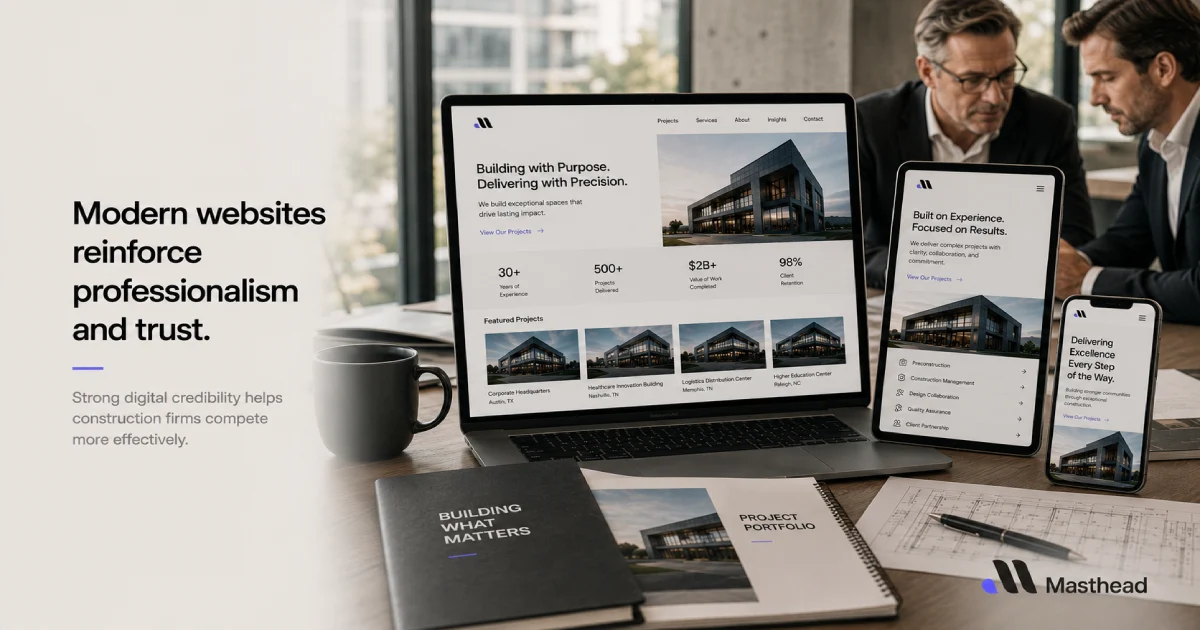
One website feels modern, organized, and professional. Projects are easy to review. Services are clearly explained. Contact information is visible.
The second website is acceptable but dated.
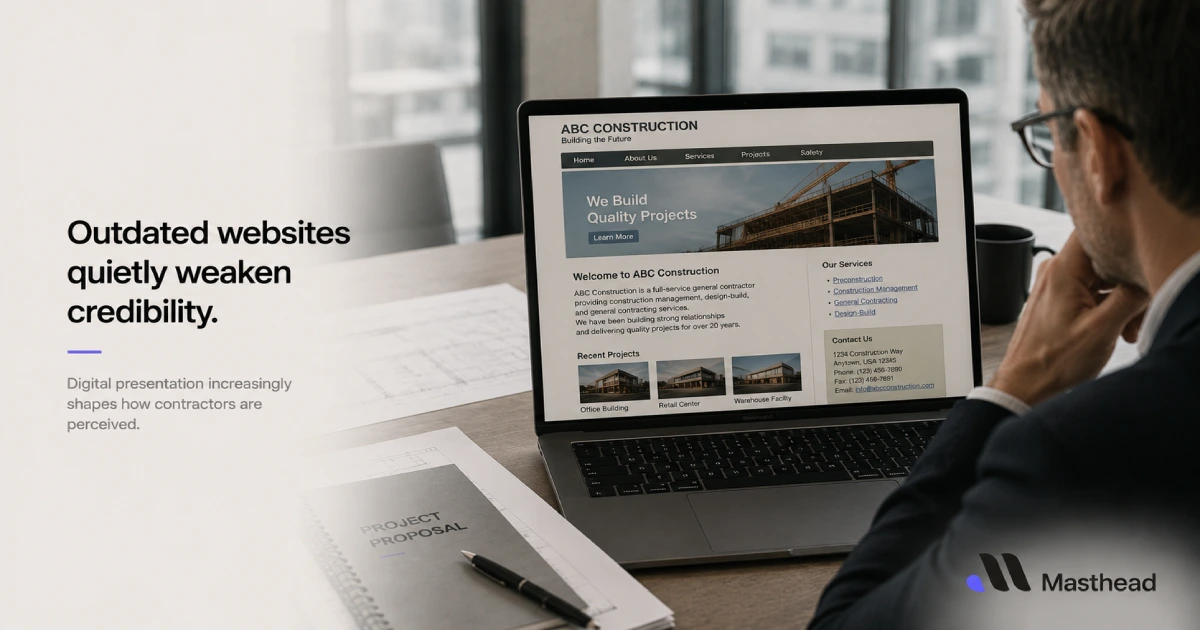
The third feels neglected. Navigation is confusing, project photos are old, and pages appear incomplete.
Even before proposals are submitted, impressions have already formed.
Whether fair or unfair, buyers often associate digital professionalism with operational professionalism. An outdated website can create questions that never needed to exist. Many of the factors that shape these perceptions are discussed in what makes a great construction website in 2026.
Outdated Design Creates Unnecessary Doubt
Most contractors do not lose trust because of poor workmanship.
They lose trust because their digital presence fails to reflect the quality of the company behind it.
Many older websites were built five, seven, or even ten years ago. At the time, they may have been perfectly acceptable. But digital expectations evolve.
A website that once felt modern may now appear:
- cluttered
- difficult to navigate
- visually outdated
- inconsistent with current branding
- disconnected from modern buyer expectations
Visitors rarely analyze these details consciously. Instead, they form a general impression.
The website either feels current and trustworthy, or it does not.
When it does not, confidence begins to erode.
Buyers Are Looking for Signs of Professionalism
Commercial construction projects involve substantial investments.
Project owners, developers, facility managers, and procurement teams are looking for evidence that a contractor is capable of delivering successfully. Your website contributes to that evaluation.
Buyers often ask themselves questions such as:
- Does this company seem established?
- Do they have experience with projects like ours?
- Are they organized?
- Do they communicate clearly?
- Would they be easy to work with?
An outdated website can make answering those questions more difficult.
Not because the contractor lacks capability, but because the website fails to communicate it effectively. This challenge is one reason commercial contractors need better websites in today’s market.
Weak Project Presentation Makes Experience Hard to Evaluate
One of the biggest weaknesses of older contractor websites is how they present project experience.
Construction is a proof-driven industry. Clients want evidence. They want to see what types of projects a contractor has completed, understand the scope of work involved, and evaluate whether the company has relevant experience.
Yet many older websites provide little more than a handful of photographs.
Projects are often:
- difficult to find
- poorly organized
- missing context
- visually outdated
The strongest contractor websites treat projects as case studies rather than galleries. They explain challenges, solutions, outcomes, and expertise.
This helps potential clients understand not only what was built, but why the contractor was qualified to build it.
Poor Mobile Experiences Reduce Confidence
Construction professionals spend much of their day away from traditional office environments.
Developers review contractors while traveling. Project managers browse websites from job sites. Owners compare companies during meetings.
As a result, mobile traffic continues to grow throughout the construction industry.
Unfortunately, many older contractor websites were never designed with mobile users in mind. Navigation becomes difficult, text is hard to read, forms are frustrating to complete, and important information can be difficult to access.
A poor mobile experience does more than frustrate users. It creates the impression that the company is behind current expectations.
Investing in responsive web design is now essential for maintaining credibility across devices.
Generic Messaging Makes Contractors Blend Together
Many older contractor websites rely on the same marketing language used by countless competitors.
Visitors encounter phrases like:
- “Quality workmanship.”
- “Customer satisfaction.”
- “Trusted construction solutions.”
While these statements sound positive, they rarely help buyers understand what makes a company different.
Modern construction buyers want clarity. They want to know:
- What industries the contractor serves
- What types of projects they specialize in
- What geographic markets they operate in
- What expertise separates them from competitors
Specificity builds confidence. Generic messaging creates uncertainty.
Search Visibility Is Increasingly Tied to Website Quality
Trust is not the only thing older websites affect.
They often impact visibility as well.
Many outdated contractor websites struggle because they lack the structure needed to compete in modern search results. Common issues include:
- thin service pages
- weak internal linking
- missing location pages
- outdated technical SEO
- poor content architecture
As a result, competitors with stronger websites gain visibility while experienced contractors remain difficult to find.
A website that cannot be discovered has limited ability to generate opportunities. Many of these shortcomings are covered in website features every construction company needs.
Recruiting Is Affected Too
Websites influence more than potential clients.
They influence potential employees.
The construction industry continues to face recruiting challenges across many markets. Skilled project managers, estimators, superintendents, engineers, and field personnel often research companies online before applying.
An outdated website can unintentionally signal:
- limited growth
- outdated systems
- weak culture
- lack of investment
Modern websites help reinforce that a company is evolving, growing, and committed to professionalism.
That perception matters when competing for talent. A strong digital presence can also support hiring efforts, as discussed in how a modern website can help attract and retain top talent.
What Modern Contractor Websites Do Differently
The strongest contractor websites share several characteristics.
They communicate expertise clearly. They make project experience easy to understand. They load quickly and work well on mobile devices. They help visitors understand who the company serves and why clients choose them.
Most importantly, they reduce uncertainty.
Every page is designed to build confidence rather than create questions.
The goal is not simply to look modern. The goal is to communicate capability more effectively.
Trust Is Built Through Small Signals
Many contractors assume trust comes primarily from referrals and reputation.
Those factors remain important.
But digital trust is often built through dozens of small signals working together, including:
- Professional project portfolio.
- Clear navigation.
- Thoughtful messaging.
- Fast page speed.
- Strong branding.
- Mobile usability.
Individually, these details may seem minor. Collectively, they shape how buyers perceive the business.
The strongest websites understand this and intentionally reinforce credibility throughout the experience. Even seemingly small factors like mobile page speed performance can influence user perception and engagement.
Final Thoughts
An outdated website does not automatically mean a contractor is outdated.
Unfortunately, buyers do not always make that distinction.
As construction buyers continue to research companies online before making contact, websites increasingly influence trust, credibility, and first impressions.
The firms gaining an advantage are not necessarily the ones with the flashiest designs. They are the ones whose websites accurately reflect the professionalism, expertise, and capability of the organization behind them.
In 2026, a contractor’s website is often one of the first opportunities to earn trust.
Companies that invest in that opportunity are positioning themselves more effectively for long-term growth.
If you’re evaluating whether your current website reflects your company’s capabilities, contact our team or visit Masthead Technology to learn more.
FAQs
Why do outdated contractor websites hurt trust?
Outdated websites can create the impression that a company is less organized, less professional, or less capable than competitors, even when that is not actually true.
How often should a contractor website be updated?
Most contractor websites should be reviewed every three to five years to ensure they remain aligned with current branding, technology, user expectations, and SEO requirements.
Why are project portfolios important on contractor websites?
Project portfolios provide proof of experience and help potential clients evaluate whether the contractor has completed similar work successfully.
Does mobile optimization affect trust?
Yes. Poor mobile experiences often create frustration and can make a company appear behind current industry standards.
Can an outdated website hurt lead generation?
Absolutely. Weak user experience, poor search visibility, and reduced trust can all contribute to fewer inquiries and missed opportunities.