
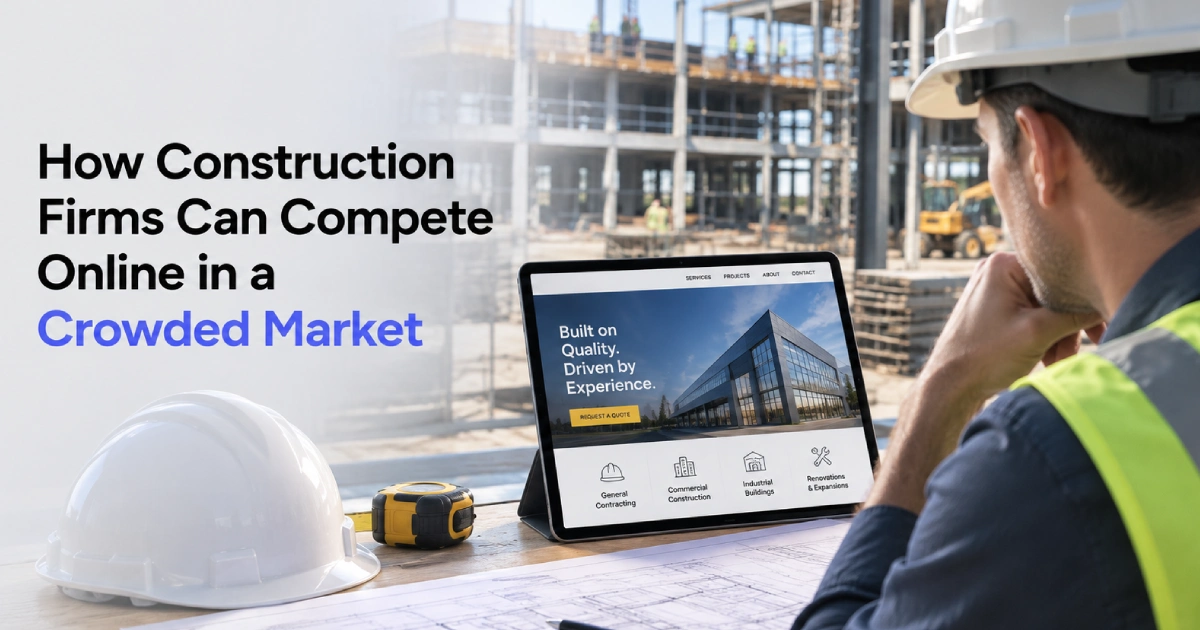
How Construction Firms Can Compete Online in a Crowded Market
The construction industry is competitive, and simply having a website is no longer enough to effectively reach and evaluate potential clients online. Commercial buyers, developers, property owners, and project managers regularly research multiple contractors online before deciding who to call.
To stand out, companies need more than a basic online brochure. They need an active approach that matches how commercial clients research, compare, and hire builders.
From search engine visibility and clean website design to detailed project galleries and fast technical performance, smart digital choices can help construction firms compete online and reach more relevant commercial opportunities.
Why Online Competition Matters for Builders
Construction companies have always relied on referrals, personal handshakes, repeat clients, and strong local reputations. Those relationships will always be important, but many prospective clients now use the internet to research and verify contractors.
A project owner will search for a builder, look over several websites, review available credentials and safety information, and review completed work before picking up the phone.
If competitors rank higher on Google or present their past projects in greater detail, they may be more likely to attract the initial inquiry. This is one of the main reasons construction firms lose out on RFQs. A strong online presence helps your firm remain visible, demonstrate its qualifications, and make it easy to get in touch when new opportunities arise.
Show What Makes Your Company Different
The first step in competing online as a construction firm is knowing what makes your team the right choice for the job.
Many contractor websites use the same broad claims about honesty, quality, and experience. While those are important, they do not help a property developer tell one firm from another.
Turn Real Strengths Into Clear Website Copy
Focus on specific facts that matter to project owners:
- Deep experience in niche industries (like cold storage, healthcare, or retail)
- In-house design-build or preconstruction capabilities
- Proven safety records and relevant EMR information
- Modern project tracking and communication tools
- Clear regional coverage and strong local subcontractor networks
Put these strengths prominently across your homepage and service pages so visitors can understand your capabilities quickly.
Build a Website That Helps Buyers Make Decisions
Your website should give prospective clients the basic information they need to evaluate your firm without having to call your office first. Knowing what makes a great construction website in 2026 comes down to structure, clarity, and buyer-first functionality.
Key Sections for a Contractor Website
- Core Services: Dedicated pages for every main service line
- Target Industries: Specialized experience in the building sector
- Project Portfolio: Filterable, detailed project case studies
- About & Safety: Licenses, insurance, leadership, and relevant safety information
- Simple Contact: Fast quote requests and direct phone numbers
A clean layout makes it easy for visitors to find what they need and helps search engines understand and index your pages. Investing in professional construction website design ensures these core elements work together smoothly.
Use SEO to Reach Clients Early in Their Search
Search engine optimization is one of the key tools that can help construction firms reach potential clients during the research stage. Partnering with tailored SEO services for construction companies ensures your business has a strategy for reaching relevant commercial searches.
Decision-makers search for builders using specific terms, such as:
- Commercial construction contractor in [City]
- Design-build commercial contractor
- Industrial warehouse builder
- Commercial renovation company
- Medical office building contractor
A focused digital marketing strategy for construction targets queries with real commercial intent rather than generic keywords that may bring less relevant traffic.
Build Detailed Service Pages
A common mistake on construction websites is listing all capabilities on a single page with just a few bullet points. This gives prospective clients very little information and makes it more difficult for search engines to understand the individual services you offer.
Create dedicated pages for each core service you provide.
What to Include on Each Service Page
- Clear description of what the service covers
- Typical project sizes, scopes, and building types
- Your preconstruction and field management process
- Photos of completed projects using that service
- Answers to common client questions about permits and timelines
- Direct buttons to request a bid or schedule a call
Specific details help demonstrate your capabilities and give search engines more context about each service.
Let Past Work Prove Your Experience
Construction is a visual business. Potential clients want solid proof that your crew has completed projects similar to what they are planning. Understanding website features every construction company needs will help you turn basic photo uploads into useful project proof.
Turn Photo Galleries Into Useful Case Studies
Instead of just uploading pictures, add short written summaries that explain:
- Project size, location, and building type
- Specific client goals and timeline requirements
- Site challenges, such as tight lot lines or strict city permits
- How your team solved those issues
- Final build photos and project outcomes
Detailed project stories give developers and facility managers useful evidence of your team’s experience and approach to project challenges.
Strengthen Local and Regional Search Visibility
Most contractors operate within specific geographic territories. Local SEO helps your company improve visibility when potential clients in those markets search for building partners.
To build regional visibility:
- Keep your Google Business Profile complete and up to date.
- Make sure your company name, address, and phone number match across all business directories.
- Build unique location pages for each market you serve that feature local projects and client stories.
Avoid creating duplicate pages that only swap out town names. Provide real details about the work you have completed in each area.
Publish Content That Answers Project Questions
Publishing straightforward articles helps you reach potential clients during early planning and research stages by answering questions they may have before selecting a contractor.
Helpful article topics include:
- How to budget for a commercial tenant fit-out
- Comparing design-build with traditional design-bid-build
- Common zoning and permitting hurdles in commercial builds
- How to plan site logistics for active facilities
Linking these guides directly to your service pages and case studies helps visitors move from informational content to relevant project and service information.
Make Verification and Safety Records Easy to Find
Commercial clients want to confirm that a contractor is licensed, insured, and has appropriate safety credentials and information available before sending an RFP. Establishing credibility early is central to how construction companies build trust online.
Make sure your website clearly shows:
- State contractor licenses and relevant bonding information
- Safety awards, safety certifications where applicable, and EMR ratings
- Industry memberships (such as AGC, ABC, or local builder groups)
- Quotes and reviews from property owners and architects
- Professional bios and years of experience for company leadership
Putting these credentials on key service and project pages gives prospective clients relevant information they can use during the contractor evaluation process.
Ensure Fast Speed and Clean Mobile Layouts
A slow, hard-to-navigate site can make it harder for visitors to find information and may encourage them to leave the site. Understanding why most construction company websites fail often traces back to poor technical execution and uncompressed assets.
Make sure your site provides:
- Fast loading speeds by compressing high-resolution job site images
- A fully responsive design that works smoothly on phones and tablets
- Clear, easy-to-read text without small fonts
- Clean buttons for calling the office or submitting a project inquiry
A reliable, fast site supports a better user experience and makes important business information easier to access.
Keep Your Digital Presence Fresh and Active
An outdated website with years-old projects can make prospective clients question whether the information reflects your current capabilities. Ongoing construction website support ensures your technical framework, portfolio, and security stay modern without pulling your team away from field operations.
Regularly maintain your online brand by:
- Adding new project case studies as builds finish
- Updating your list of services, staff, and safety stats
- Checking for broken links and updating outdated contact forms
- Refreshing content to match current business information, building requirements, and market conditions
An active site helps demonstrate that your website reflects the current state of your business.
Conclusion
To compete successfully online as a construction firm, you do not need a complex website with gimmicks. You need a clean digital presence built around what commercial buyers care about most.
By highlighting your real differentiators, sharing detailed project stories, targeting high-intent local search terms, and making it easy to request a bid, you turn your website into a dependable business asset. A well-maintained website can support your broader business-development and marketing efforts by making your firm’s capabilities easier to research and evaluate.
If you are ready to modernize your web presence and strengthen your digital strategy, contact Masthead Technology to discuss your digital roadmap.
Frequently Asked Questions
How can a construction company compete online for construction firms in local markets?
You can compete online by optimizing your website for relevant local search terms, showing detailed case studies of completed regional projects, keeping your Google Business Profile updated, and making your contact information clear on every page.
What should be included in a construction digital marketing strategy?
A strong construction digital marketing strategy should include a fast, mobile-friendly website, dedicated service pages, detailed project case studies, local search optimization, visible safety credentials, and simple quote request forms.
Why are detailed case studies better than simple photo galleries?
Detailed case studies explain project size, site challenges, construction solutions, and outcomes. This provides useful evidence of your team’s experience and problem-solving approach rather than just showing completed project photos.
How often should a construction firm update its website?
Add new project case studies and photos as soon as jobs are completed, and review your service pages, team details, and safety credentials every few months to keep your site up to date.
What trust signals are most important on a builder’s website?
The most important trust signals include state contractor licenses, relevant safety information such as EMR data, client testimonials, industry association memberships, and clear bios of company leadership.