
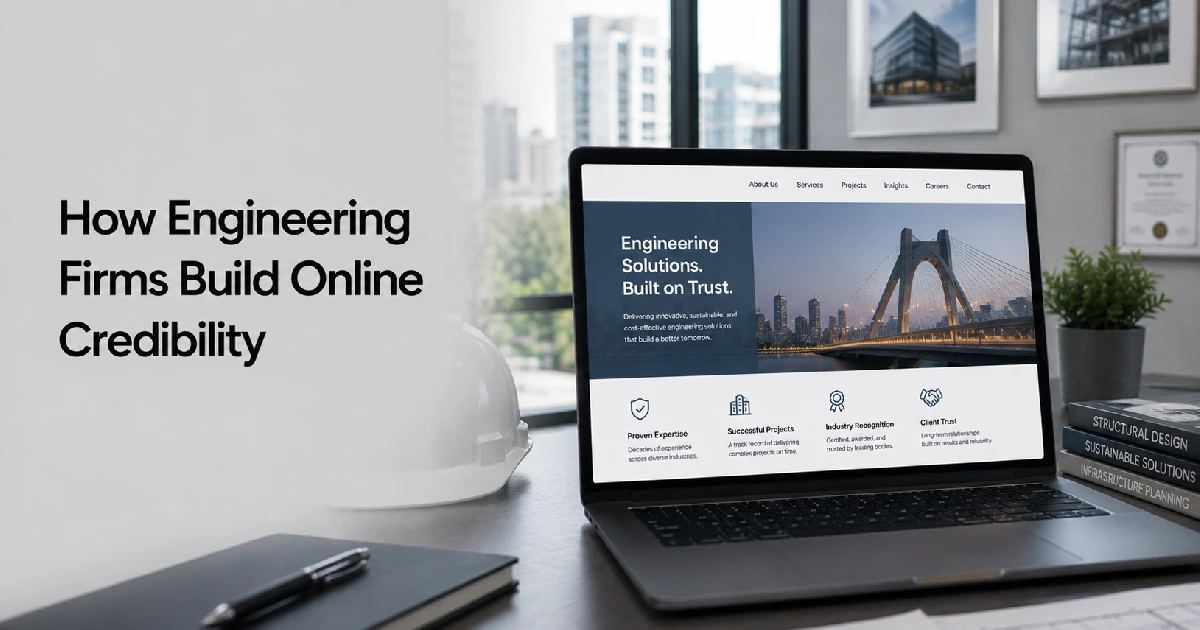
How Engineering Firms Build Online Credibility in 2026
Engineering has always been a profession built on credibility.
Clients trust engineering firms to design critical infrastructure, solve technically complex problems, manage significant budgets, and make decisions that can affect public safety, operational efficiency, and long-term project success.
That level of responsibility means trust is never optional.
It has always been earned through experience, technical expertise, successful project delivery, and professional relationships.
Today, however, there’s another place where that trust is established.
Online.
Before scheduling a meeting or requesting a proposal, prospective clients often spend considerable time researching engineering firms. They review websites, compare project portfolios, search Google, read articles, visit LinkedIn profiles, and evaluate whether a firm appears capable of handling their project.
This research happens long before the first conversation.
The firms that build credibility during this stage gain an important advantage.
Credibility Is About Reducing Uncertainty
When organizations hire an engineering firm, they are making a significant decision.
Whether the project involves a manufacturing facility, healthcare campus, transportation network, or commercial development, there are financial, operational, and reputational risks involved.
Naturally, decision-makers want confidence. They are asking themselves questions like:
- Does this firm have experience with projects like ours?
- Are they technically capable?
- Can they be trusted with a complex project?
- Do they understand our industry?
- Will they communicate effectively?
Every element of your online presence should help answer those questions.
The goal isn’t to convince people that you’re credible. The goal is to make your credibility obvious.
Your Website Is Often the First Impression
Many engineering firms still view their website as an online brochure, which is often why engineering firm websites feel outdated.
In reality, it has become one of the most important credibility-building tools a business owns.
A prospective client may know nothing about your firm before visiting your website.
Within a few minutes, they begin forming opinions based on what they see.
- Is the website organized?
- Does it explain services clearly?
- Are projects easy to review?
- Does the firm appear established?
- Does it feel current?
These impressions may seem subtle, but together they shape how visitors perceive your business.
Investing in professional website design services ensures your site reflects modern standards and avoids common engineering website design mistakes. A well-structured layout doesn’t create expertise—it simply communicates the expertise that already exists.
Project Case Studies Provide Proof
One of the strongest ways to build online credibility is by demonstrating experience rather than talking about it.
Many engineering firms still showcase projects using a single photograph and a short description.
While this confirms that work was completed, it doesn’t communicate the value behind it.
A stronger approach is to structure your site to engineering website design to showcase expertise online by presenting projects as detailed case studies.
Each case study should explain:
- The client’s objectives.
- The engineering challenge.
- The technical solution.
- The project’s outcome.
- The value delivered.
This approach allows prospective clients to understand how your team thinks, solves problems, and approaches complex work. If you are comparing layout ideas, looking at the best engineering firm website examples 2026 can provide useful inspiration. Real examples build confidence far more effectively than broad claims.
Specificity Builds More Trust Than Marketing Language
Generic statements such as “innovative engineering solutions” or “trusted engineering partner” appear on countless websites.
The problem isn’t that they’re inaccurate.
The problem is that they don’t tell prospective clients anything meaningful.
Credibility grows when firms become specific.
Explain:
- Which engineering disciplines you specialize in.
- Which industries you serve.
- The size and complexity of projects you handle.
- The standards and regulations you regularly work with.
- The types of problems your team solves.
The more precisely you describe your expertise, the easier it becomes for clients to recognize whether your firm is the right fit.
Thought Leadership Demonstrates Expertise
Prospective clients don’t always need an engineering consultant immediately.
Many are still researching. They’re looking for guidance on regulations, design considerations, planning processes, or industry developments.
Publishing educational content allows your firm to demonstrate expertise before a project even exists. This strategy is central to how digital marketing for engineering companies actively drives business growth.
Examples include:
- Engineering best practices.
- Infrastructure planning insights.
- Sustainability strategies.
- Building code updates.
- Design considerations.
- Technical explanations for non-engineering stakeholders.
This content positions your firm as a trusted resource rather than simply another service provider. Understanding how engineering firms generate leads online relies heavily on consistent thought leadership that strengthens both visibility and credibility over time.
Professional Profiles Reinforce Confidence
People often choose engineering firms because they trust the professionals behind them.
That is why leadership and team pages deserve more attention than they typically receive.
Rather than listing names and job titles alone, highlight:
- Professional qualifications.
- Years of experience.
- Areas of specialization.
- Industry certifications.
- Professional memberships.
- Significant projects.
These profiles humanize the business while reinforcing the expertise within the organization.
Integrating modern website features for engineering companies—such as interactive team bio cards or linked project portfolios—helps prospective clients connect the dots. They aren’t just hiring a company; they’re hiring the people who will solve their problems.
Testimonials Are More Powerful When They’re Specific
Client testimonials continue to play an important role in credibility. However, generic praise has limited impact. A statement such as “Great company to work with” offers very little insight.
More effective testimonials describe:
- The project.
- The challenge involved.
- The firm’s communication.
- The technical expertise demonstrated.
- The results achieved.
Context makes testimonials believable. It also helps future clients relate the experience to their own projects.
Visibility Supports Credibility
People naturally place greater confidence in organizations they encounter repeatedly.
Appearing in search results, publishing educational content, and maintaining a professional LinkedIn presence all contribute to familiarity.
This is where targeted marketing matters. Utilizing specialized construction SEO services and implementing dedicated SEO for engineering firms ensures your technical content reaches decision-makers right when they search.
Search engine optimization, educational articles, and industry content work together to keep your firm present during the research phase of a project.
Consistency Across Every Touchpoint Matters
Online credibility isn’t built by a website alone. Prospective clients often move between multiple sources before making contact.
They may visit:
- Your website.
- Your LinkedIn page.
- Google Business Profile.
- Industry directories.
- Published articles.
- Conference presentations.
If these touchpoints communicate consistent messaging, branding, and expertise, confidence grows.
Inconsistency, on the other hand, creates uncertainty.
Your online presence should feel like one connected experience. Having reliable technical help, such as ongoing website support for construction companies, ensures your platform remains secure, fast, and bug-free across all devices.
Credibility Is Built Over Time
Unlike advertising, credibility cannot be created overnight. It grows gradually through repeated demonstrations of expertise.
- Every new case study.
- Every educational article.
- Every successful project.
- Every client testimonial.
- Every speaking engagement.
- Every improvement to your website contributes to a stronger reputation.
If you are planning an update to your digital platform, following an engineering firm website redesign checklist will keep your content strategy focused on authority and trust.
The firms with the highest levels of online credibility are rarely those making the boldest marketing claims.
They are the ones consistently providing evidence of their expertise.
Final Thoughts
Engineering firms have always earned trust through technical excellence and successful project delivery.
In 2026, that trust increasingly begins online.
Before meetings are scheduled or proposals are requested, prospective clients are evaluating your expertise through your website, your content, your projects, and your overall digital presence.
The firms that communicate their experience clearly, demonstrate real expertise, and provide meaningful proof will naturally stand apart. If you need assistance scaling your digital presence, you can explore services at Masthead Technology or contact us to speak with our specialists.
FAQs
What builds online credibility for engineering firms?
A combination of a professional website, detailed project case studies, educational content, client testimonials, leadership profiles, certifications, and consistent branding helps establish credibility.
Why are case studies more effective than project galleries?
Case studies explain the engineering challenge, technical solution, and project outcome, giving prospective clients a deeper understanding of your expertise.
Does thought leadership improve credibility?
Yes. Publishing educational content demonstrates expertise, positions your firm as an authority, and builds trust before a prospective client even contacts you.
How important is SEO for online credibility?
SEO increases visibility, allowing more organizations to discover your firm during the research phase. Combined with high-quality content, it reinforces credibility over time.
Can a website alone build trust?
A website is an important starting point, but credibility is strengthened through consistent messaging, valuable content, successful projects, professional profiles, testimonials, and ongoing visibility across multiple online channels.